

Deen Before Screen: A Realistic Morning Sunnah Routine for Kids
The first thing many children reach for is not water or a parent hug—it’s a glowing rectangle.
If that sentence stings, you’re not alone. Screens are engineered to win the morning. Deen before screen is a family rule that flips the order: remembrance, prayer, and human connection first—then, if at all, media. It is not about raising kids in a museum. It is about training attention so Allah and family get the first fruits of the day.
This guide gives you a realistic morning Sunnah-inspired sequence, age bands, scripts for pushback, and troubleshooting for dark winters, late nights, and one-parent mornings. Soft parenting guidance—not a fatwa. Adapt times to your latitute, school bus, and energy.
What “Deen Before Screen” Means (and Doesn’t)
Means:
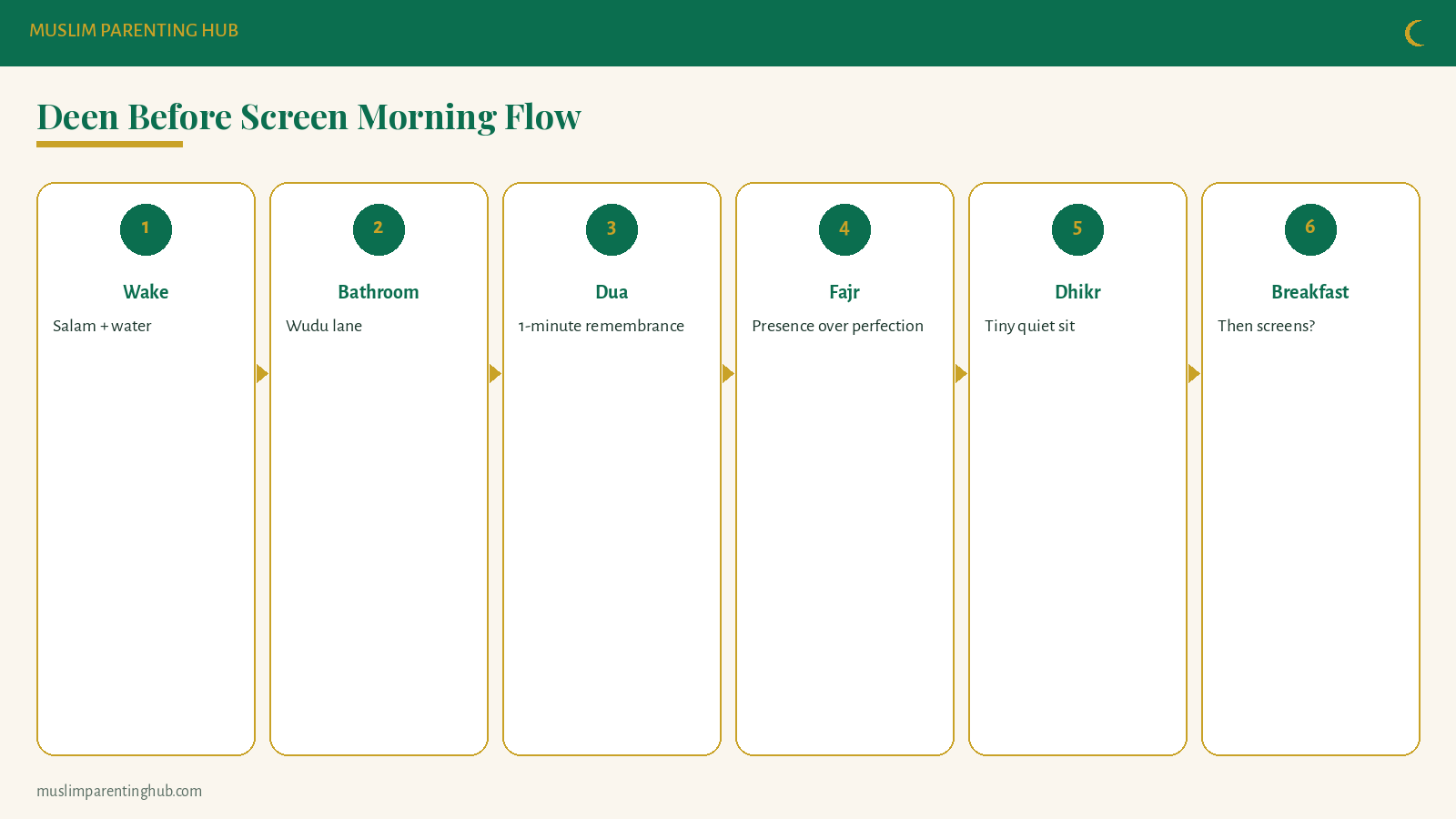
- Wake → bathroom → morning dua / remembrance → Fajr (pray or sit with parents as age allows) → short dhikr or quiet moment → breakfast → then any agreed screens (or none on school days).
Doesn’t mean:
- A perfect Tajweed class before toast
- Shame if you miss a day
- Zero screens forever for every family
- Ignoring special needs, medical apps, or parent work realities
Think of it as a default order, not a purity contest.
Why Mornings Are Worth Protecting
- First attention shapes the day’s mood. Scrolling spikes dopamine before the heart has spoken to Allah.
- Fajr identity grows when children see parents rise for salah—even if kids only watch and cuddle.
- House peace improves when “Can I have the tablet?” is answered by a known sequence, not a debate.
- Evening rules stick better when mornings match—pair with Maghrib-first habits from After-School Maghrib Routine and bedtime calm from Toddler Bedtime Fixes.
The Realistic Morning Sequence (Kid Edition)
1) Wake gently
Lights soft if possible. Salam to your child. Offer water. Avoid starting with “Hurry up” energy if you can—save firmness for the bus deadline later.
Script: “Assalamu alaikum. New day—Alhamdulillah. Bathroom first, then we talk to Allah.”
2) Bathroom & wudu lane
Toddlers: help with toilet manners without shame (Islamic potty training). Older kids: wash for Fajr as they are able. Keep a stool, towel, and patience in the same place every day.
3) Morning dua / short remembrance
One minute is enough. Model wake-up dua in Arabic you know, plus an English heart line: “Ya Allah, bless this day and help us be kind.” Grow own-words skill with Dua From the Heart.
4) Fajr together (presence over perfection)
- Toddlers: on a prayer mat nearby, copying bits, or quiet cuddle while you pray.
- Preschoolers: join movements they know; keep corrections tiny.
- School-age: encourage praying with you; if they’re still learning, stand beside and coach gently after—not mid-unit with harshness.
Missed perfection is normal. Showing up is the win.
5) Micro dhikr or quiet twenty breaths
After Fajr: three soft SubhanAllah / Alhamdulillah / Allahu Akbar counts, or simply sitting for half a minute. No need for a long wird with a cranky five-year-old.
6) Breakfast as connection
Screens off at the table by default. Ask one question: “What is one good we hope for today?”
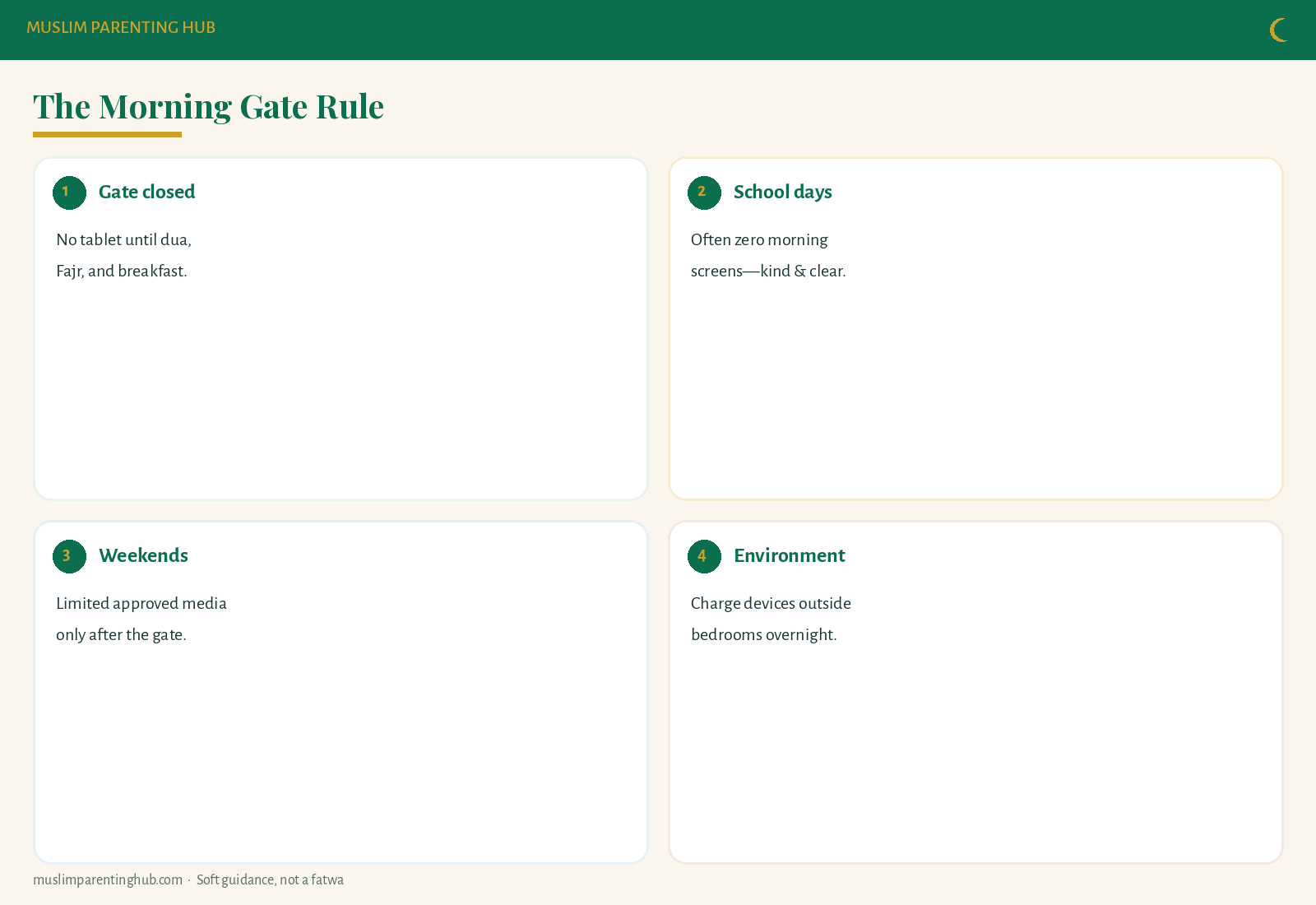
7) Screens? Only after the gate
If your family allows morning media (weekend cartoons, Quran apps with visuals, etc.), open the gate after steps 1–6. Use timers and Approve Content habits from YouTube Kids setup. Many school days need zero pre-school screens—that’s okay and often kinder.
Age Bands: Make It Fit
Toddlers (1–3)
- Goal: they watch the rhythm and feel calm bodies nearby.
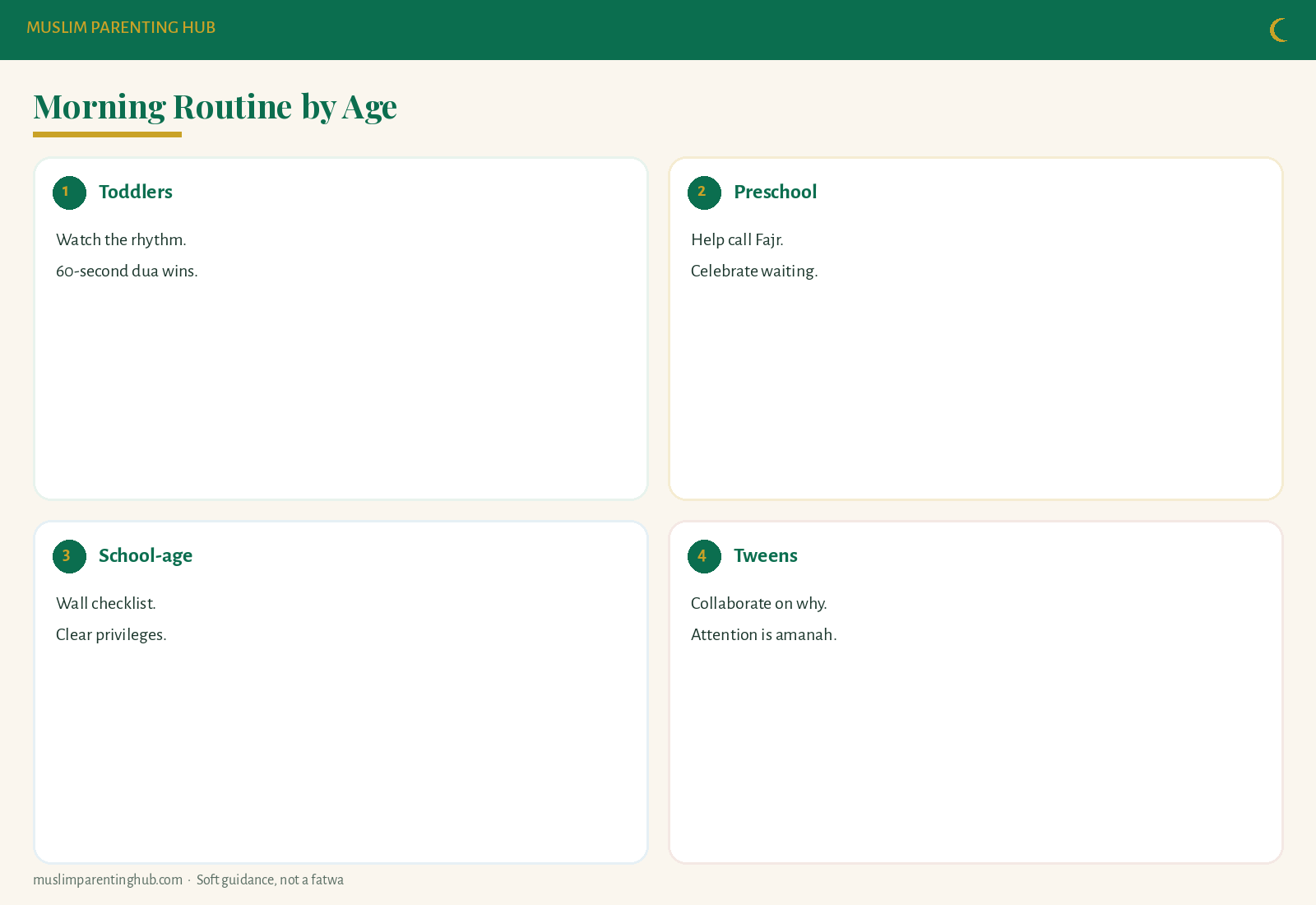
- Skip long sitting. A 60-second dua + seeing Fajr is huge.
- If they cry for cartoons immediately, use a visual: picture card “Pray → Eat → Then tablet (weekend).”
Preschool (3–5)
- Can help call family: “Fajr time!”
- Short participation on the mat.
- Celebrate: “You waited until after breakfast—mashaAllah.”
School-age (6–10)
- Personal alarm or parent wake.
- Clear checklist on the wall.
- Tie privileges (weekend screens, game time) to morning order without constant nagging lectures.
Tweens
- Collaborate on the checklist.
- Respect privacy while keeping Fajr non-negotiable as a household value.
- Discuss why deen-before-screen: attention is an amanah.
Scripts for Pushback
“I want the tablet now.”
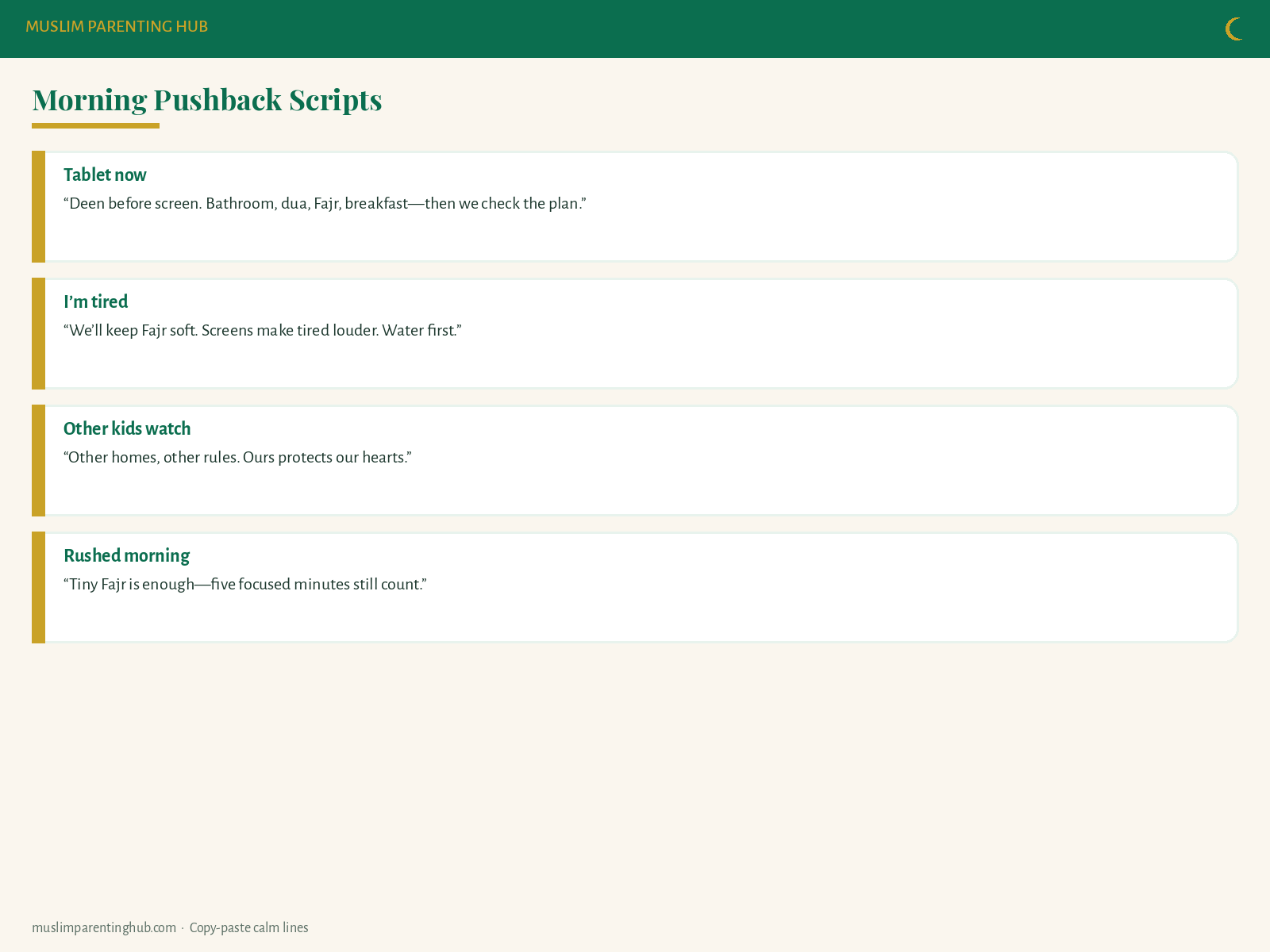
“I hear you. In our home, deen before screen. Bathroom, dua, Fajr, breakfast—then we check the plan. The tablet isn’t saying no forever; it’s saying wait.”
“But I’m tired.”
“Tired is real. We’ll keep Fajr soft—sit with me if you need. Screens make tired louder, not softer. Water first.”
“Other kids watch in the morning.”
“Other homes have other rules. Our rule protects our hearts. You can still have fun later.”
Sibling comparison
“Your brother is older, so his checklist looks different. Your job is your card. Fair isn’t always identical.”
(More on fairness: Sibling Jealousy in a Muslim Home.)
Parent late for work
Run a tiny Fajr: wudu, pray, one line of dua, granola bar, shoes. Deen-before-screen can be five focused minutes—not a retreat.
Winter Fajr, Exams, and Imperfect Weeks
Dark winters: Use a warm lamp, cozy socks on the mat, and lower the shame if everyone moves slowly. Consistency of order beats identical joyfulness.
Exam weeks / illness: Keep Fajr and a one-line dua; pause nonessential extras. Mercy is part of deen.
Ramadan mornings: Suhoor + Fajr already front-load worship—protect against “I’ll just check my phone while eating” as the new default. Model phone-free suhoor when you can.
Friday mornings: If Jummah changes the schedule, keep the gate rule: remembrance and salah before entertainment. Evening joy still shines in Friday Night Family Routine.
Setting Up the House So Willpower Isn’t the Hero
Environment beats lectures.
- Charging station outside bedrooms overnight for kids’ devices.
- Parent modeling — your own morning scroll teaches more than your rules.
- Visual checklist at kid eye level.
- Weekend vs weekday columns so expectations are clear.
- Quran audio as a permitted “morning sound” if you want ambience without a dopamine slot machine.
If you need a bridge for younger kids, allow a static Islamic nasheed/Quran speaker—not open YouTube—before breakfast, still after wake dua/Fajr when possible.
A 7-Morning Launch Plan
| Morning | Focus |
|---|---|
| 1 | Announce the rule kindly; devices charged in kitchen |
| 2 | Visual checklist goes up |
| 3 | Celebrate any wait without a screen |
| 4 | Practice “tiny Fajr” on a rushed day |
| 5 | Review weekend exceptions as a family |
| 6 | Repair if you slipped—no spiral |
| 7 | Family dua: “Ya Allah, make us people who remember You first.” |
Slips will happen. Restart at the next wake without a courtroom.
Linking Mornings to Evenings
Deen-before-screen fails when evenings are chaotic. Protect Maghrib, limit late stimulating media, and use bedtime adhkar so wake-ups aren’t battles. Morning obedience is often evening leftovers.
Salam as you wake each child also spreads peace before logistics—see Teach Toddlers to Say Salam.
Sample Weekday Timeline (Illustrative)
Clocks differ by country and season—this is a shape, not a fatwa clock.
- Wake — soft salam, water, curtains
- +5 min — bathroom / wudu help
- +10 min — morning dua (standing or on the mat)
- +12–25 min — Fajr and a tiny quiet sit
- +30 min — breakfast + bags/shoes
- Gate open? — only if your weekday rule allows; many homes keep the gate closed until after school
On days when Fajr is very early relative to school, some older kids return to sleep after Fajr. That can still honor deen-before-screen if devices stay outside the bedroom. Decide as a family and keep the rule visible.
When Parents Work Shifts or Travel
If Fajr lands while one parent is at work:
- Pre-record a kind voice note of morning dua for kids to hear (optional).
- Older sibling can model without becoming a second parent-police.
- Weekend catch-up: a slightly longer shared Fajr breakfast conversation so the value doesn’t only live on “easy” days.
Travel mornings: airport tablets happen. Restart the gate at the next ordinary home morning without a guilt speech. Istiqamah is returning—not never slipping.
Measuring Success Without Obsession
Track for two weeks:
- How often did devices wait until after Fajr/breakfast?
- How was the tone—harsh or warm?
- Did anyone’s sleep crash because of earlier wakeups?
If warmth collapses, shorten the sequence. A kind tiny Fajr beats a bitter long program. Barakah includes the face you wear at dawn.
FAQ: Deen Before Screen Mornings
What is a deen before screen morning routine for Muslim kids?
It is a simple order: wake, bathroom, morning dua, Fajr (participate as age allows), short dhikr, breakfast—then any allowed screens. Remembrance and salah get the first attention; media waits.
Should kids never use screens in the morning?
Not necessarily. Many families ban screens on school mornings and allow limited, approved media on weekends after the deen gate. Choose a clear rule you can enforce without daily arguing.
How do I do Fajr with toddlers who won’t stay still?
Invite presence: a mat nearby, copying some motions, or quiet cuddling while you pray. Prioritize your salah’s calm. Toddlers learn by watching consistency more than by perfect stillness.
What if my child sneaks the tablet in bed?
Change the environment: charge devices outside bedrooms, use parental controls, and repair the relationship without humiliation. Reset the rule next morning. Address boredom and sleep quality too.
How long should morning dhikr be for kids?
Often under two minutes. A few phrases of praise or a short own-words dua is enough. Lengthen only while hearts stay soft.
Can Quran apps count as “deen” before other screens?
Sometimes—as a bridge—if they are truly Quran-focused and time-limited. Be honest: if the app becomes a gateway to games, it failed the gate. Prefer parent-led recitation when possible.
What if only one parent is Muslim-practicing or home at Fajr?
The available parent carries the rhythm without bad-mouthing the other. Keep the sequence simple and kind. Unity messaging matters: children should not feel torn.
Closing: First Fruits for Allah
You will not win every sunrise. You can teach a household grammar: Allah first, screens later, humans in between with breakfast and salam.
That grammar, repeated, becomes identity. Identity beats willpower.
May Allah put barakah in your mornings, make Fajr beloved in your home, and protect your children’s attention from everything that dulls the heart. Ameen.
FAQs
What is a deen before screen morning routine for Muslim kids?
Wake, bathroom, morning dua, Fajr as age allows, short dhikr, breakfast—then any allowed screens. Remembrance and salah get first attention.
Should kids never use screens in the morning?
Not necessarily. Many families ban screens on school mornings and allow limited approved media on weekends after the deen gate.
How do I do Fajr with toddlers who won’t stay still?
Invite presence on a nearby mat or quiet cuddles while you pray. Your calm consistency teaches more than perfect stillness.
What if my child sneaks the tablet in bed?
Charge devices outside bedrooms, use parental controls, and reset the rule next morning without humiliation.
How long should morning dhikr be for kids?
Often under two minutes. A few phrases of praise or a short own-words dua is enough while hearts stay soft.
Can Quran apps count as deen before other screens?
Sometimes as a bridge if truly Quran-focused and timed. If they gateway into games, they failed the gate—prefer parent-led recitation when possible.